

Deck Builder in Pittsburgh.
Composite, wood, multi-level, and custom decks — a Pittsburgh deck builder engineering for hillside lots and the freeze-thaw winters that take cheap decks apart in five years. Licensed, insured, transparent quotes.
Pittsburgh deck design and construction for the way the land actually sits.
Half the homes in our region sit on a slope, and most of them have a deck built like the house is flat. As a Pittsburgh deck builder we build for what’s actually there: helical-pier footings where the soil moves, ledger flashing done right so the band joist doesn’t rot, and railings that pass code on the first inspection.
We build composite and wood decks across the Greater Pittsburgh region — Wexford, Cranberry, the North Hills, Sewickley, Mt. Lebanon, Fox Chapel, Squirrel Hill, and the city’s neighborhoods (see our areas served). From a 200-square-foot back patio deck to a 1,200-square-foot multi-level off a hillside home, every build starts with a site walk and a frank conversation about budget, materials, and what your existing structure can take.
Composite decks
Trex, TimberTech, Azek, Fiberon. Low-maintenance, 25-year fade warranties, and a finish that still looks new after a Pittsburgh winter.
Cedar & hardwood
Western red cedar, Ipe, and Cumaru. Warm, premium, and worth the extra finish maintenance. We stain and seal so the wood lasts.
Multi-level & hillside
Stepped decks, cantilevered platforms, and decks built into a slope. Engineered footings — including helical piers when the soil demands them.
Railings, screens & pergolas
Aluminum, cable, glass, and wood railings. Privacy screens, pergolas, built-in benches, and integrated planters. The deck above the boards.
Composite vs. wood vs. hardwood.
The right decking material depends on your budget, how much maintenance you want to do, and how the deck will be used. Here is the honest trade-off on the three we build most across Pittsburgh.
Lowest maintenance
Zero refinishing, 25–50-year warranties, and a finish that still looks new after a decade of Pittsburgh winters. Highest up-front cost; lowest cost over time.
Trex · TimberTech · Azek · Fiberon
Cedar & pressure-treated
Pressure-treated pine is the budget choice (~25 years with annual sealing). Western red cedar is warmer, naturally rot-resistant, and lasts 20–30 years with light upkeep.
Pressure-treated · Western red cedar
Premium tropical
Ipe and Cumaru — dense, beautiful, and extremely durable. Premium price and worth the periodic oiling for a deck that reads luxury underfoot.
Ipe · Cumaru
We bring physical samples of every material to the first site walk so you can compare them against your house in real light.
Recent decks built across Pittsburgh.
Hillside composite deck
Pittsburgh · Skyline view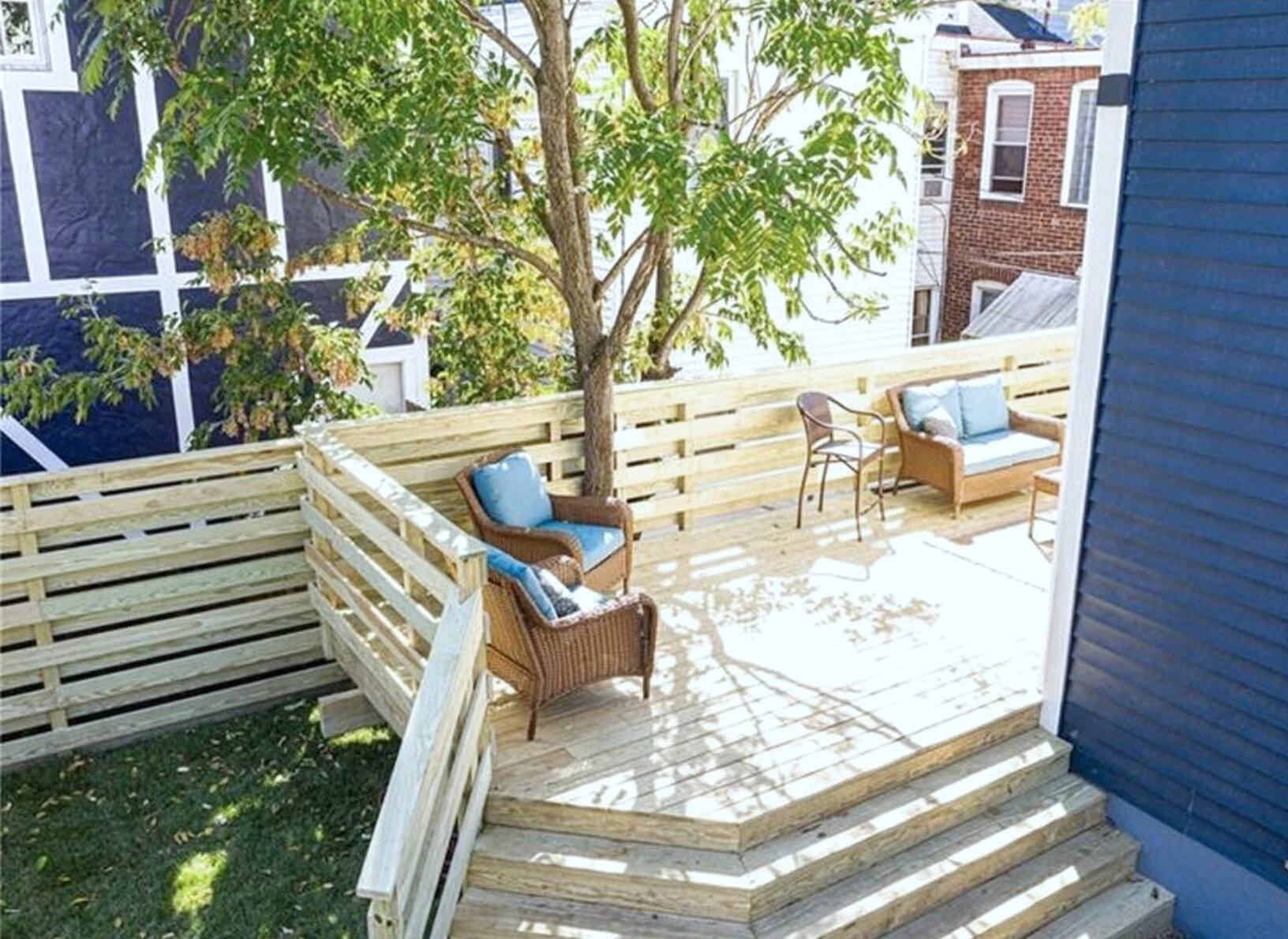 Multi-tier · Lawrenceville
Multi-tier rowhouse deck
Lawrenceville · Built around a tree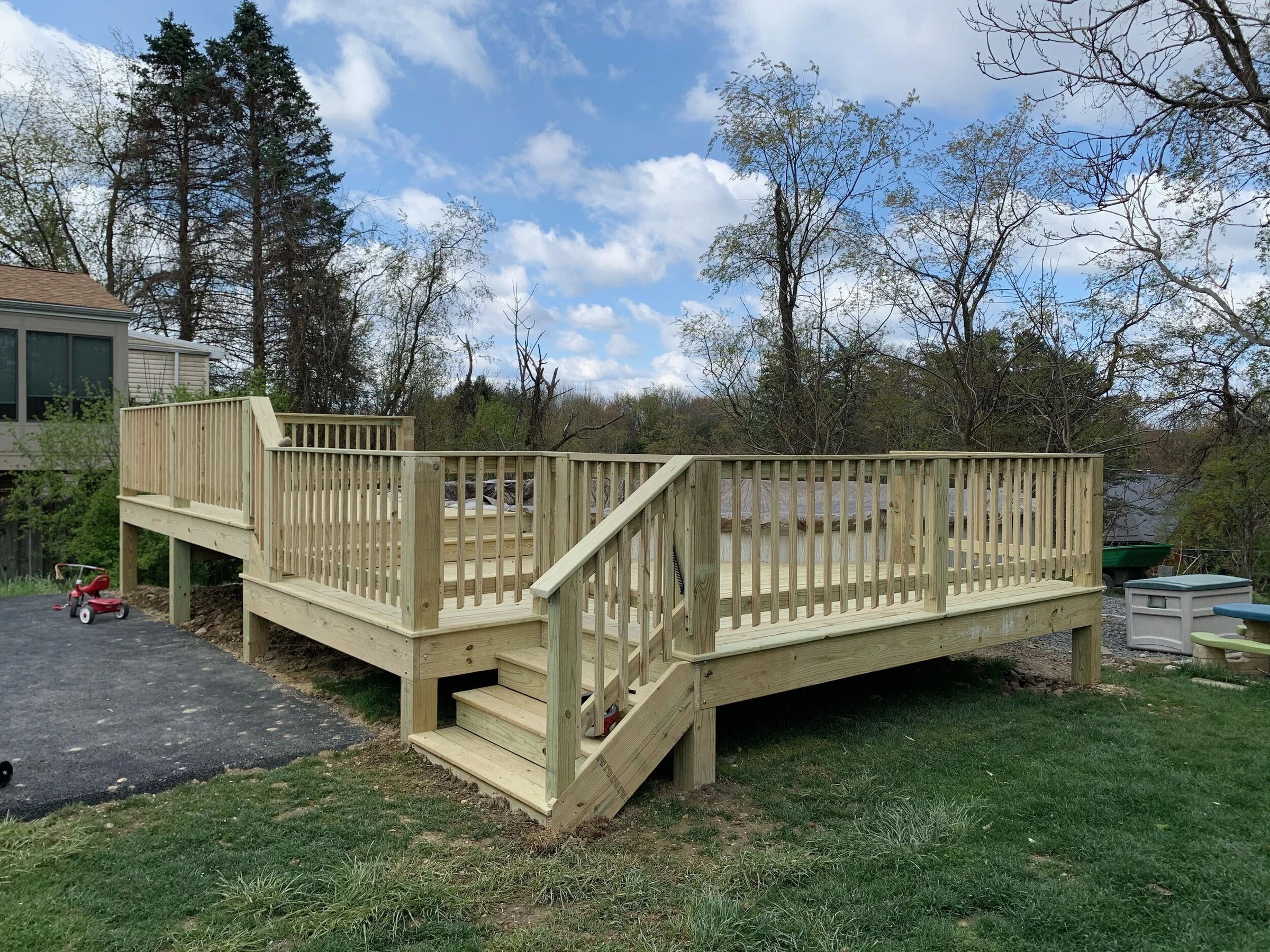 Multi-level · Pressure-treated
Multi-level back deck
North Hills · Pressure-treatedHillside view deck
Pittsburgh · CompositeThree steps — scoped honestly before the first board goes down.
Site walk & design
We walk the lot with you, sketch a layout against the house’s structure and your view, and price three material options so you can see the real cost difference between pressure-treated, cedar, and composite.
Permits & footings
We pull the deck permit through your municipality (Pittsburgh PLI, Mt. Lebanon, North Hills boroughs — we know them all), then set frost-depth footings or helical piers. The framing only goes up after the inspector signs off.
Frame, deck & rail
Ledger flashing done right, joists at the proper span, hidden fasteners on composite, code-compliant railings, and finish carpentry on the trim. Final inspection, then you’re entertaining on it that weekend.
Deck questions Pittsburgh homeowners actually ask.
How much does a deck cost in Pittsburgh?
Roughly $35–$50 per square foot for pressure-treated, $55–$85 for cedar, and $70–$120 for premium composite or hardwood — installed, including framing, footings, and basic railings. Multi-level builds, hillside footings, custom railings (cable, glass), or built-ins push the upper end. We quote fixed after a site walk, not by the square foot alone.
Do I need a permit for a deck in Allegheny County?
Almost always, yes — anything attached to your home or over 30 inches off the ground requires a building permit in most Pittsburgh-area municipalities. We pull the permit, manage inspections (footings, framing, final), and hand you the closeout paperwork. You don’t deal with PLI.
What’s the difference between composite, cedar, and pressure-treated?
Pressure-treated pine is the budget option (~25-year life with annual sealing). Cedar is warmer-looking, naturally rot-resistant, and lasts 20–30 years with light maintenance. Composite (Trex, TimberTech, Azek) is the premium choice — 25–50-year warranties, zero refinishing, and the finish still looks new after a decade of Pittsburgh winters. We bring samples on the first visit.
Can you build a deck on a steep hillside?
Yes — that’s half of what we do. Hillside decks typically use helical-pier footings (driven into stable soil rather than poured) and engineered framing to handle the lateral loads. We’ll engineer it, get it permitted, and make sure the structure passes the framing inspection on the first try.
How long does a deck build take?
Most single-level decks under 400 sqft take 2–3 weeks from permit issue to final inspection. Larger or multi-level builds run 3–6 weeks. Material lead times for composite and premium hardwoods can add a week or two on the front end — we order early so they’re on-site before framing starts.
What’s the best time of year to build a deck in Pittsburgh?
April through October is ideal. We book the calendar early — most clients who want a deck by Memorial Day call us in January or February. Winter builds are possible for composite and cedar (footings just need to go below frost line and stay covered while pouring) but lead times are tighter and weather adds risk.