

Kitchen Remodel Cost in Pittsburgh: A 2026 Guide by Tier
D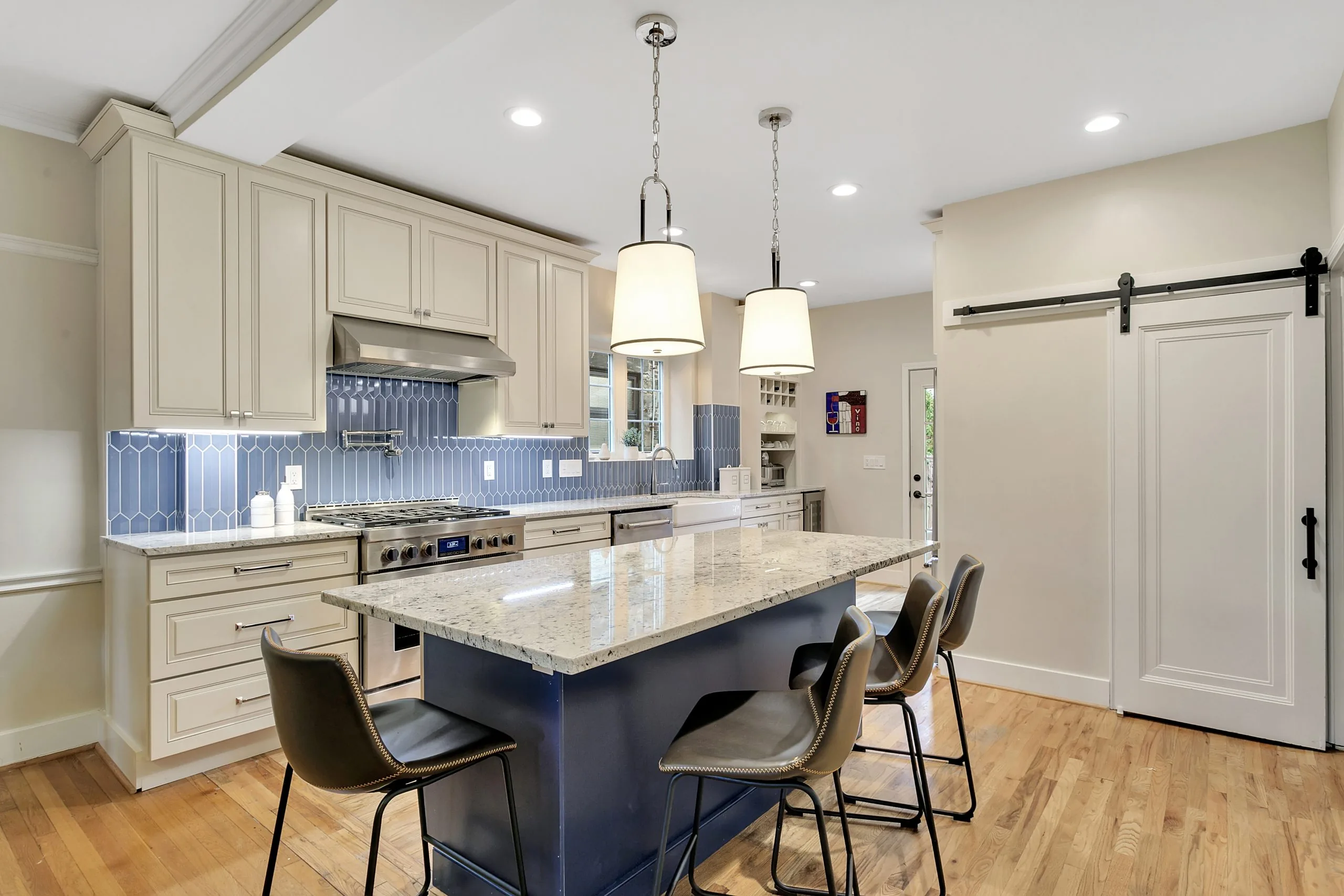
Kitchen remodel cost in Pittsburgh varies more than most homeowners expect, largely because the city’s housing stock rarely plays along with national averages. A remodel in a 1910 Lawrenceville rowhouse and one in a mid-century Point Breeze home can carry the same finishes and still land thousands of dollars apart, and most of that gap is decided before a single cabinet is ordered.
This guide breaks down real cost ranges by project tier, explains what drives prices up in Pittsburgh’s older homes, and walks through the decisions that matter most before demolition starts. It’s meant to sit alongside our kitchen remodeling page, not replace it — use this as the research stop and that page as the next step when you’re ready to scope a project.
Kitchen remodel cost in Pittsburgh, by tier
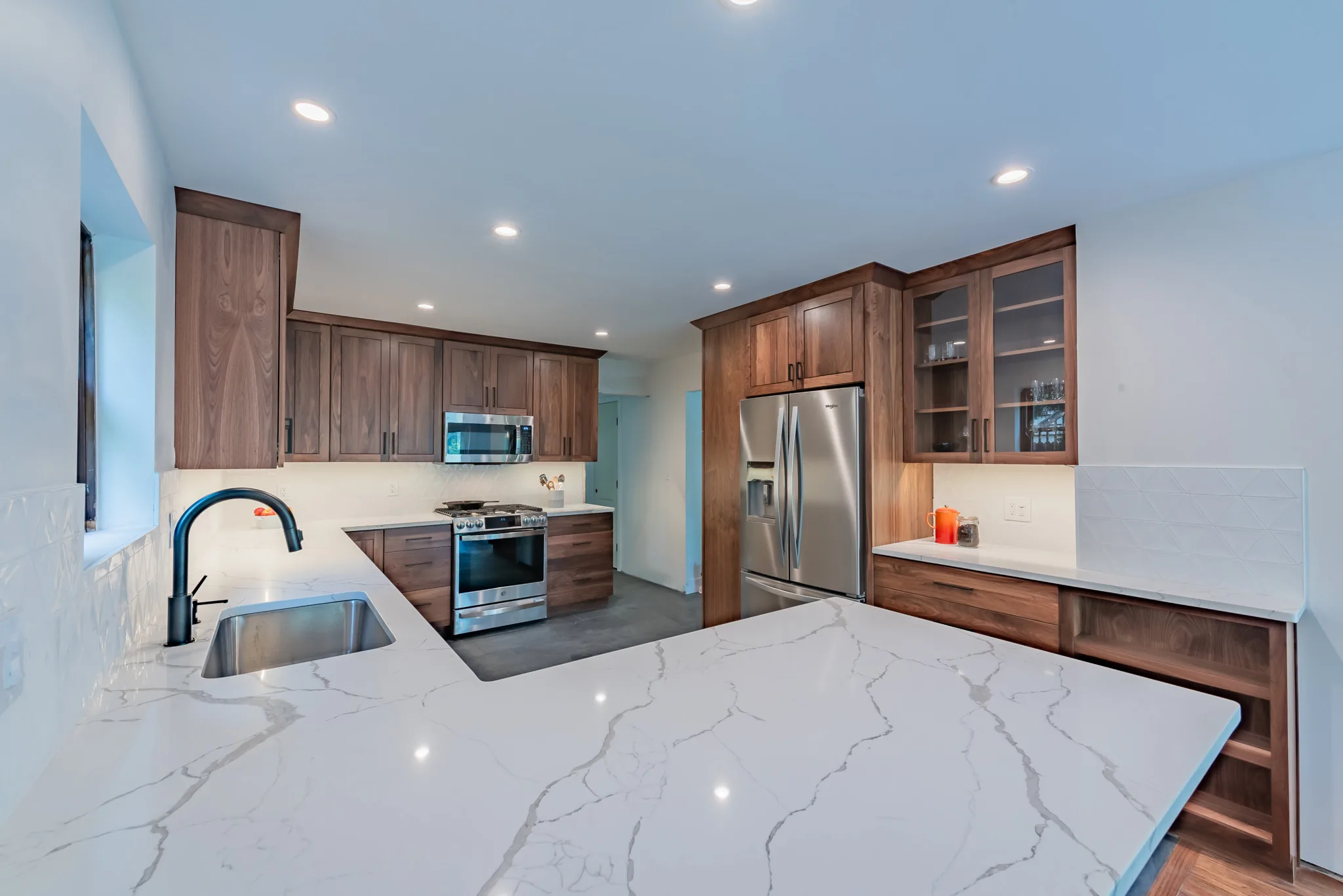
Breaking the project into tiers is the clearest way to see where your money actually goes. We think about it in three buckets, and pricing a project honestly means being upfront about which one you’re really asking for.
Most Pittsburgh kitchen projects we see land in the mid-range tier, largely because homeowners want new counters and appliances but aren’t ready to touch structural walls yet. That band is where the typical kitchen remodel cost in Pittsburgh settles for a home that keeps its existing footprint.
What shapes kitchen remodel cost in Pittsburgh homes
No two kitchen projects price out the same way, even on the same street. The kitchen remodel cost in Pittsburgh depends on the scope you choose, the condition of what’s already there, and how much of the house that kitchen touches once walls start coming down.
A cosmetic refresh on a kitchen with sound cabinets and working plumbing costs far less than a full gut on a house where the electrical panel, supply lines and floor joists all need attention at once. Any contractor pricing your job honestly should walk you through which category you actually fall into before quoting a number.
Layout changes are usually the biggest cost multiplier. Moving a sink, range or dishwasher means rerouting plumbing and electrical, and in a lot of Pittsburgh homes that means opening up plaster and lath to get there.
Cabinetry and countertops: where the budget actually goes
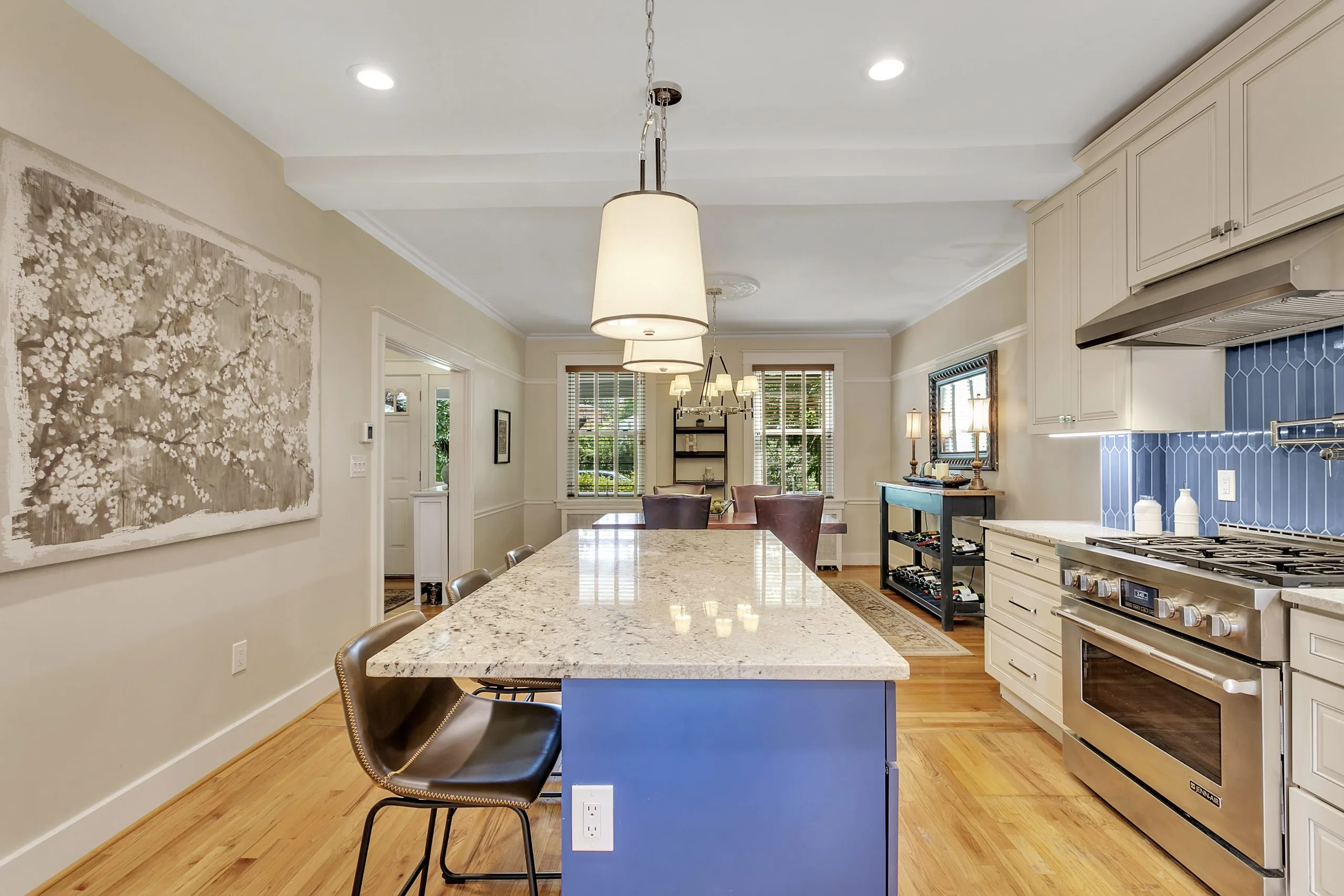
Cabinets and countertops together account for 25 to 40 percent of a typical project budget, which makes this decision the single biggest lever on final cost. Semi-custom cabinetry covers most standard layouts at a lower price point, while fully custom cabinets — often necessary in older homes with non-standard wall dimensions — cost meaningfully more per linear foot.
Countertop choice moves the number too. Laminate remains the budget option, granite sits in the middle, and quartz has become the default mid-to-high-end choice for its consistency and low maintenance, though it typically costs more installed than granite of similar quality.
- Laminate. Lowest cost, widest color range, least heat and scratch resistance.
- Granite. Natural stone, unique veining, needs periodic sealing.
- Quartz. Engineered stone, non-porous, consistent pattern, higher price point.
Appliance packages are the third major line item. A mid-range package of range, refrigerator, dishwasher and hood typically adds several thousand dollars beyond a builder-grade set, and that gap widens quickly with professional-style ranges or panel-ready refrigerators.
Pittsburgh’s older housing stock and what it adds
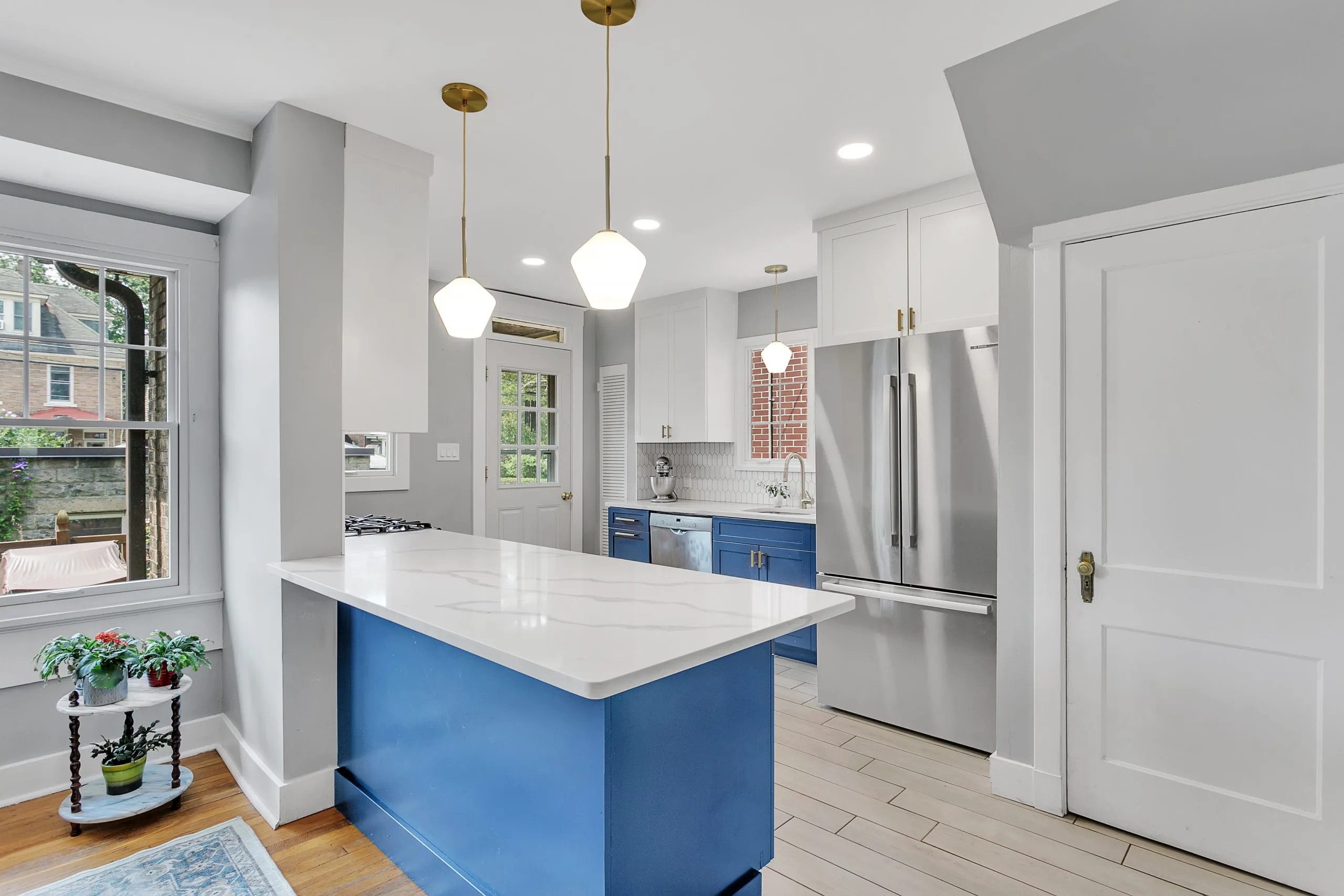
A lot of what makes kitchen remodel cost in Pittsburgh harder to predict than in newer markets comes down to what’s behind the walls. Brick rowhouses, foursquares and Victorians built in the 1900s through 1920s in neighborhoods like Lawrenceville, Bloomfield, Highland Park and Squirrel Hill were built with plaster and lath, not drywall — and that changes both the demolition process and the surprises found once it starts.
Knob-and-tube wiring, even where partially replaced, often still runs through kitchen walls in these houses. Galvanized supply lines are another common find, and once a wall opens up for a layout change, it’s common to discover corrosion that needs addressing before new fixtures go in.
Original kitchen footprints in these homes also tend to be small, since kitchens weren’t designed as gathering spaces. That’s part of why so much Pittsburgh historic renovation work involves knocking down a wall between the kitchen and an adjacent dining room or pantry — straightforward when that wall isn’t load-bearing, and considerably more involved when it is.
Our Marchand Street project in Highland Park is a good example: a Victorian exterior left intact while the ground floor opened up to connect kitchen, dining and living space as part of a broader whole-home renovation.
Cosmetic refresh vs. full gut: which fits your kitchen
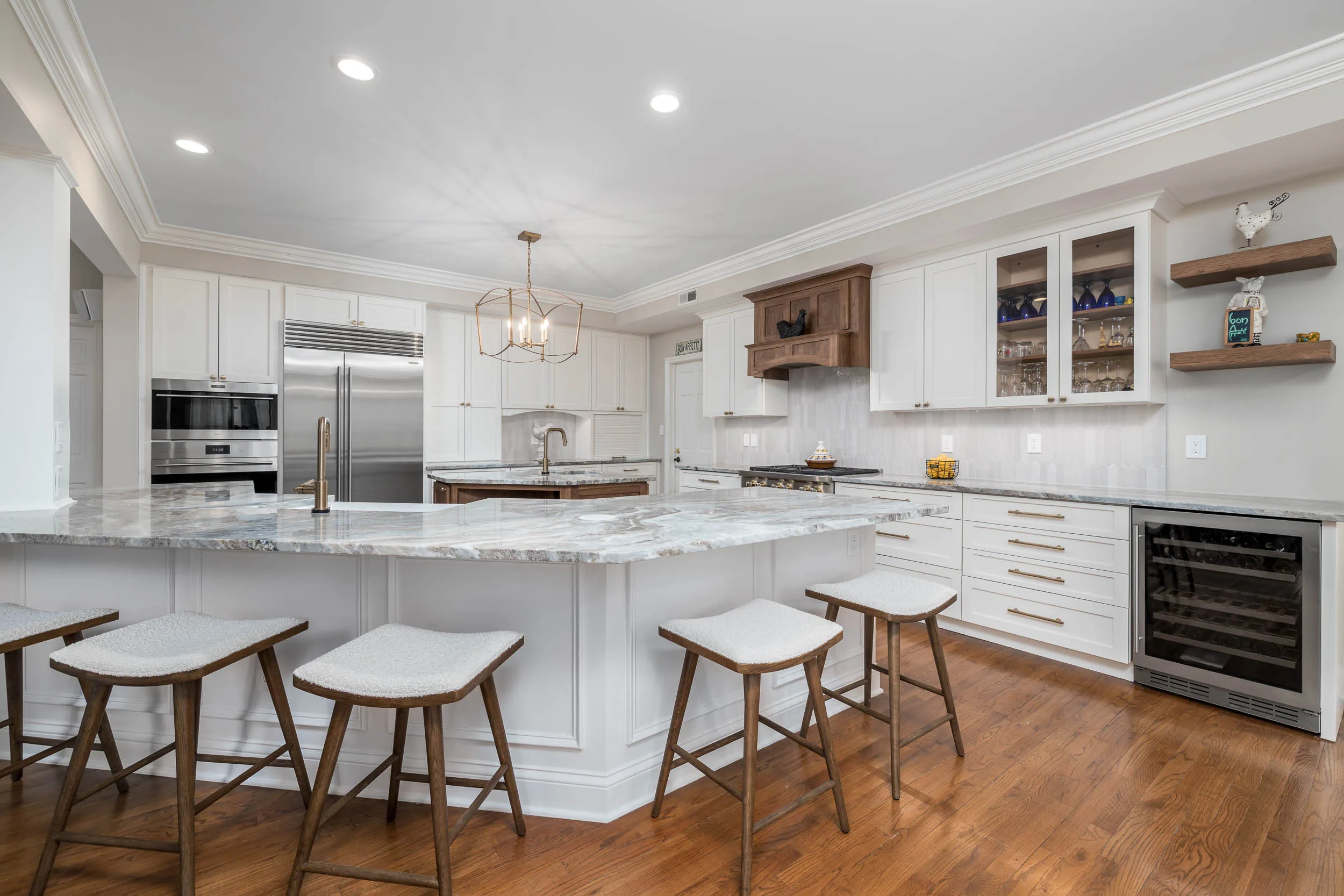
The decision between a cosmetic refresh and a full gut usually comes down to whether the existing layout works for how you actually cook and gather. If the footprint is functional and the systems behind the walls are sound, refacing cabinets and swapping counters delivers a real transformation for a fraction of the cost of moving walls.
A full gut makes sense when the kitchen is cut off from the rest of the house, when appliances don’t fit modern standards, or when the plumbing and electrical are old enough that they need replacing anyway. Keeping the existing layout keeps the timeline shorter and avoids most of the plumbing and electrical relocation costs that drive full-gut budgets up.
Move the layout when the current kitchen genuinely doesn’t work — not simply because an open floor plan looks appealing in photos.
What drives costs up in older homes
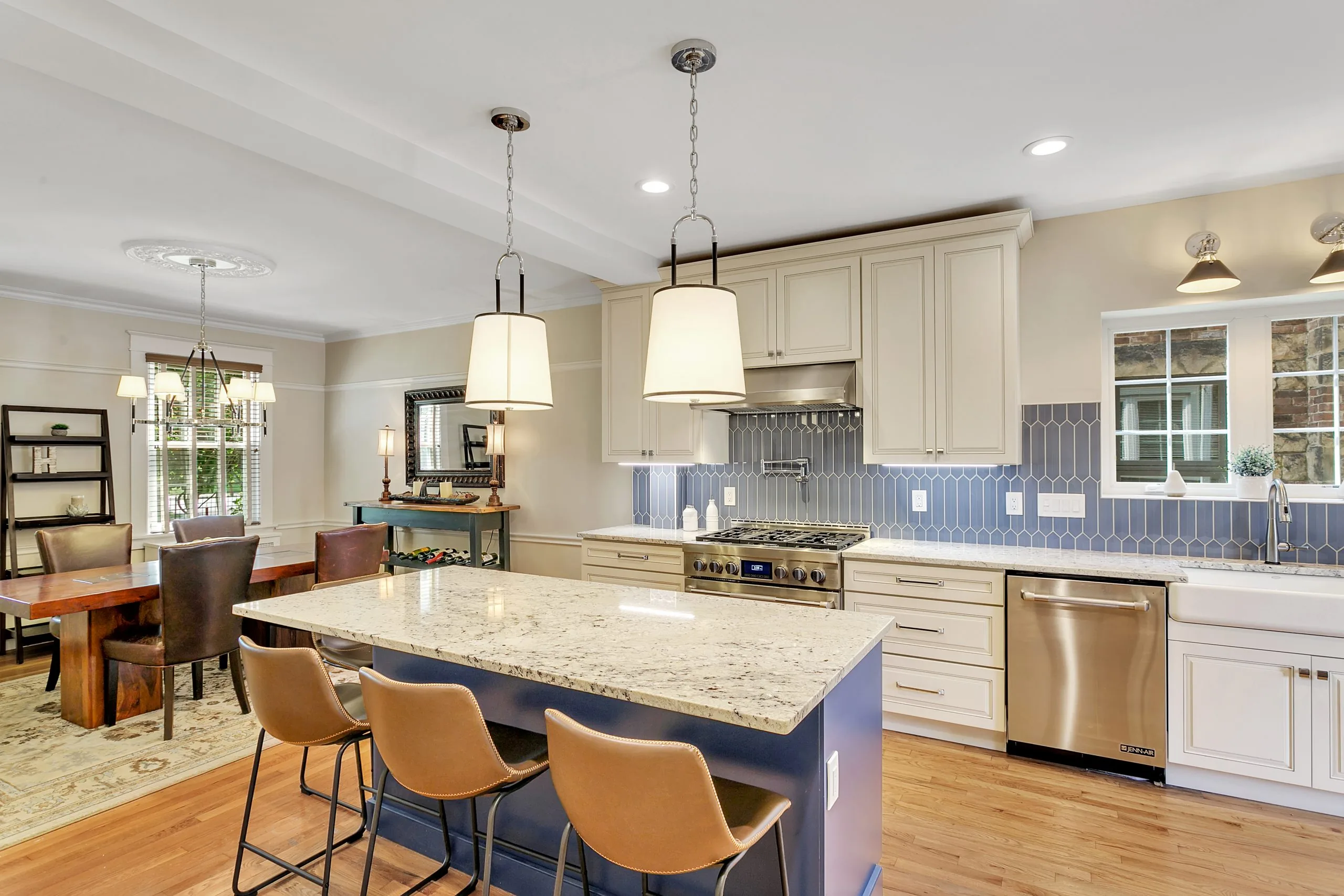
In Pittsburgh’s older housing stock, the most common cause of a budget overrun is what gets found once demolition starts. Plaster walls hide wiring and plumbing configurations that don’t show up on any inspection until the wall is open.
Structural changes are the other major cost driver. Removing a wall between a kitchen and dining room is inexpensive when that wall isn’t load-bearing, but a load-bearing wall requires a beam, engineering review and sometimes a permit process that adds both cost and time. Rerouting utilities is the third: moving a sink or range even a few feet means new supply and drain lines, and in a house with galvanized pipe it often makes sense to replace more of the system than planned once it’s already open.
Budget a contingency before you fall in love with a finish.
On pre-1940 houses we plan for a 10–20% contingency on top of the scoped price — not because something will definitely go wrong, but because plaster demolition regularly turns up knob-and-tube, galvanized pipe or a wall that’s carrying more load than it looks. A large share of Pittsburgh’s housing predates 1940 (U.S. Census Bureau housing data), which is why we see more original systems still in place here than in comparable-age homes elsewhere.
Kitchen remodel vs. a whole-home renovation
Sometimes the kitchen isn’t really an isolated project. If the roof, windows, insulation and mechanical systems all need attention around the same time, a whole-home renovation often ends up cheaper per square foot and less disruptive than a string of separate projects. This is a common path for owners of pre-war rowhouses and foursquares where deferred maintenance has piled up across several systems — the kitchen folds into one continuous scope alongside new electrical, plumbing and HVAC, rather than becoming its own separate job with its own separate disruption.
What to look for in a Pittsburgh kitchen contractor
Price alone doesn’t tell you whether a quote is realistic. A contractor who gives you one number without walking through tier, scope, and what happens if plaster demolition uncovers a problem isn’t giving you a complete picture of kitchen remodel cost in Pittsburgh. Look for a few specific things before signing anything:
- A tiered written scope. Cosmetic work separated from structural or systems work — not one lump number.
- Old-house experience. Direct familiarity with plaster walls, knob-and-tube wiring and galvanized plumbing common in Pittsburgh’s older stock.
- A stated contingency. A named percentage for hidden conditions, rather than silence until something is found.
- Comparable references. Project examples from similar homes, ideally in a similar neighborhood or housing type.
- A clear permit answer. Which permits and inspections your specific Allegheny County municipality requires.
Bringing it together
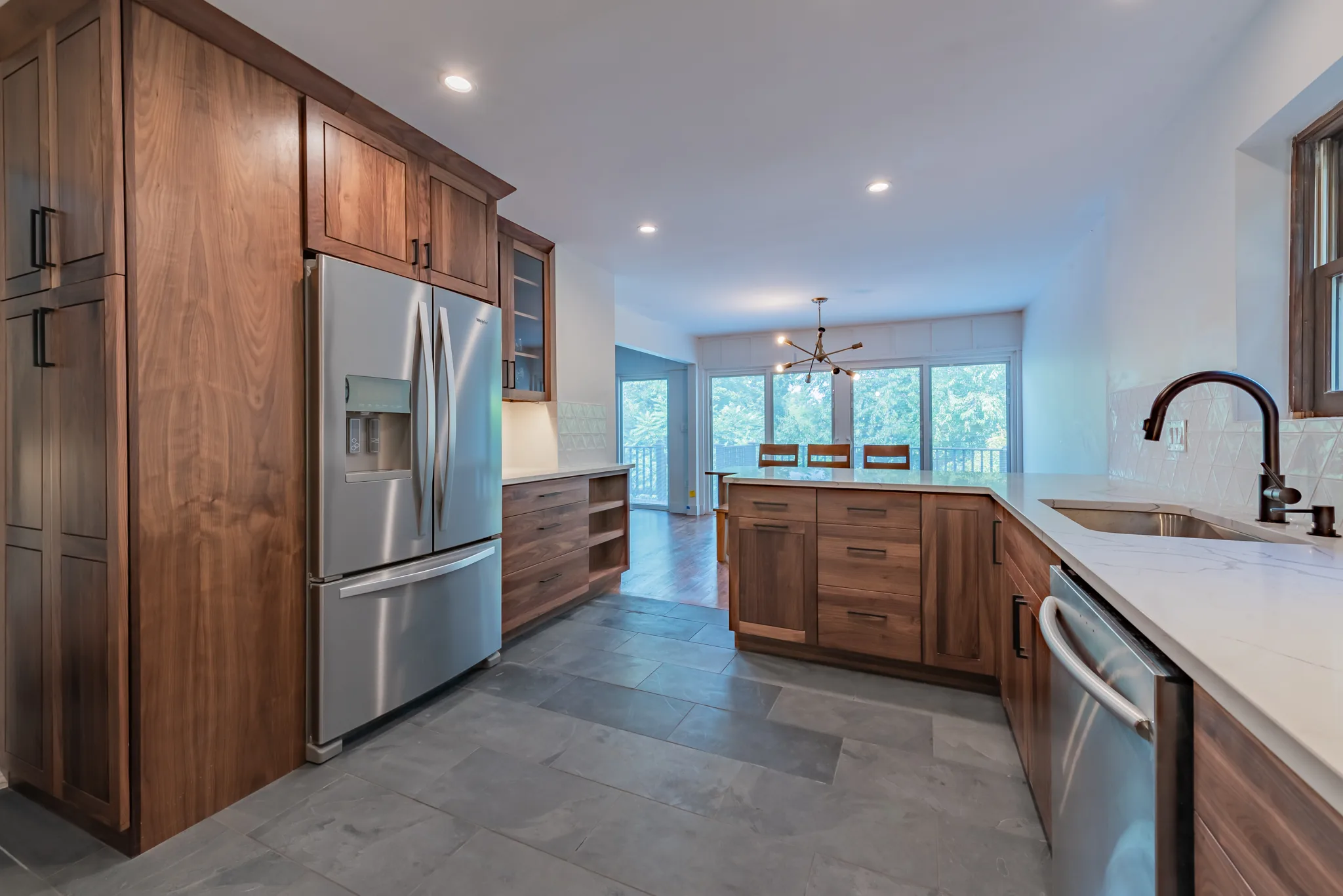
Kitchen remodel cost in Pittsburgh comes down to three real questions: how much of the layout are you changing, what tier of cabinets and counters fits your budget, and what’s likely hiding behind the plaster in a house built before 1930. Answering those honestly before demolition starts is what keeps a project inside its budget instead of watching it drift.
If you’re ready to move from research to a real scoped estimate, our kitchen remodeling page breaks down our process in more detail, and you can get in touch to talk through your specific house.
Frequently asked questions
How much does a kitchen remodel cost in Pittsburgh in 2026?
Most Pittsburgh homeowners spend between $20,000 and $50,000 on a kitchen remodel, with cosmetic refreshes starting around $15,000 and full-gut renovations running $70,000 to $150,000 or more depending on layout changes and systems work.
What is the average cost per square foot for a kitchen remodel in Pittsburgh?
Cost per square foot in Pittsburgh typically ranges from $150 to $250, though small original kitchen footprints in older rowhouses push the effective rate higher, since fixed costs like appliances and plumbing don’t shrink with the room.
Is a full kitchen gut renovation worth it in an older Pittsburgh home?
A full gut makes sense when the layout genuinely doesn’t work or the electrical and plumbing need replacing anyway. If the footprint functions and the systems are sound, a mid-range remodel or cosmetic refresh delivers most of the visual change at a fraction of the kitchen remodel cost in Pittsburgh that a full gut requires.
Why do kitchen remodels cost more in older Pittsburgh neighborhoods like Squirrel Hill?
Squirrel Hill and similar neighborhoods have larger, older homes with more original systems, plaster construction and structural considerations, which pushes typical project costs higher than smaller rowhouse kitchens elsewhere in the city.
Should I combine a kitchen remodel with a whole-home renovation?
If your home needs work on multiple systems — roof, windows, electrical, plumbing — around the same time as the kitchen, a whole-home renovation is often more cost-efficient per square foot and less disruptive than tackling each room as a separate project over several years.
What hidden costs should I budget for in a Pittsburgh kitchen remodel?
Plan for a contingency of 10 to 20 percent to cover surprises like galvanized pipe replacement, knob-and-tube wiring, or structural issues found once plaster walls are opened — all common in homes built in the 1900s through 1920s.
Are quartz countertops worth the extra cost over granite in Pittsburgh kitchens?
Quartz costs more installed than most granite but requires no sealing and offers more consistent patterning, which is why it has become the default choice in mid-range and high-end Pittsburgh kitchens. Granite remains reasonable for homeowners prioritizing natural stone at a lower price point.
Have a project in mind?
If something you read here sparked a question or a project of your own, we’d love to talk it through. No upsell, no hard sell.
Start a conversation →