

Third Floor Addition Cost in Pittsburgh: Feasibility & What to Expect
D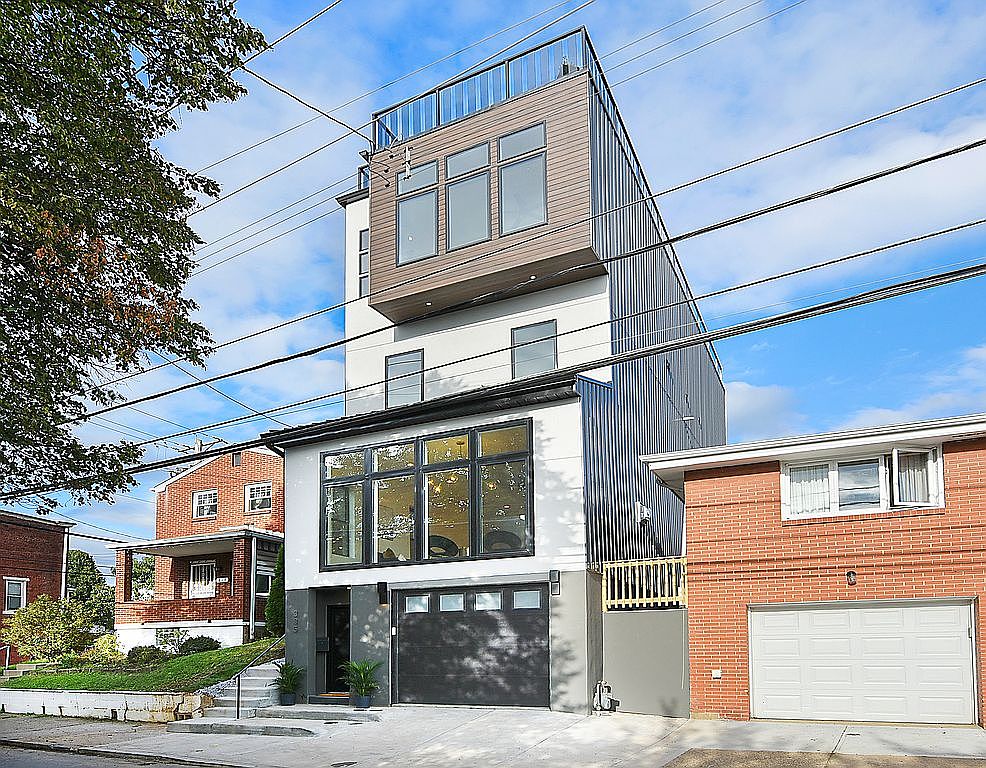
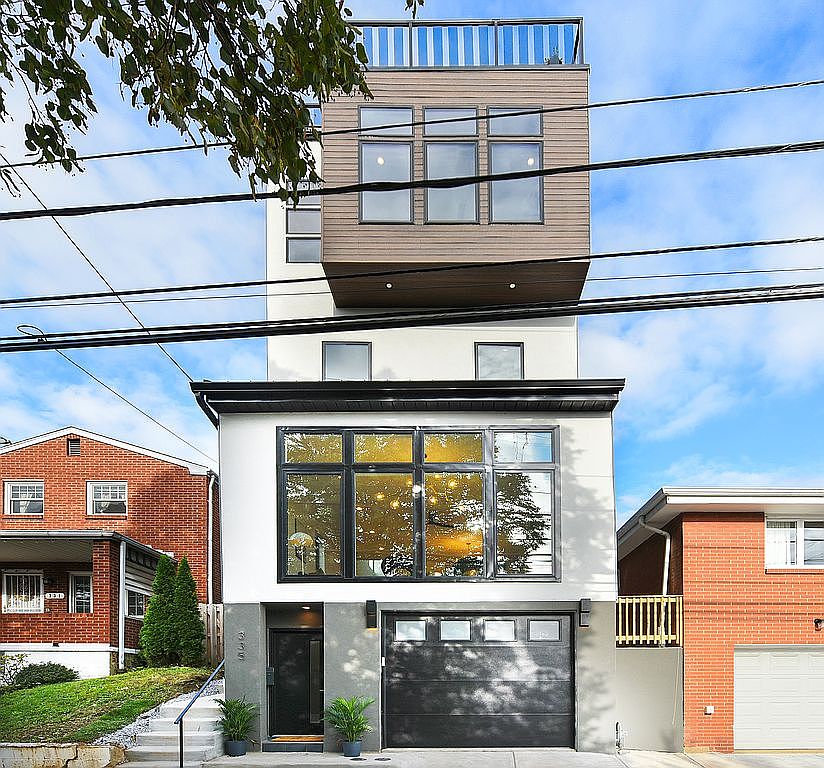
You’ve run out of room in your Lawrenceville rowhouse or Squirrel Hill foursquare, you can’t stomach the idea of moving, and you’re staring at the ceiling wondering what’s above it. A third floor addition is a real option for a lot of homeowners — but the cost, the structural feasibility, and the permit process are more involved than a typical renovation. This guide breaks down what third floor addition cost in Pittsburgh really involves — what drives the price per square foot, whether your house can carry the load, and how the permit process really works — before you commit to building up.
A third floor isn’t a renovation with a roof on top. It’s a structural project that happens to end in finished rooms — and the order you do things in decides whether it pencils out.
Can your house actually support a third floor?
This is the foundational question — literally. Pittsburgh’s housing stock is dominated by brick rowhouses, foursquares, and Victorians built mostly between 1900 and 1920. A lot of that older inventory was framed and footed for two stories of brick and plaster, not three. That single fact has a direct consequence: most third-floor additions in Pittsburgh need a structural engineer’s review before anything else happens.
What an engineer evaluates is the full load path — footings, foundation walls, the bearing walls on the first and second floors, and the existing floor structure. When those elements weren’t built to carry another story, you’re looking at reinforcement work before a single new stud goes up. Sometimes that reinforcement is modest. Sometimes it’s enough to change the math on the whole project.
The honest answer is that not every house can take a third floor without structural work that makes the project impractical. If the foundation is failing or the bearing walls are already compromised, the right move may be a rear or side addition instead. Until that review is done, any third floor addition cost in Pittsburgh you’ve been quoted is just a guess. Get the structural review done first, so you’re making decisions with real numbers instead of optimism. For a general contractor who handles vertical additions, coordinating that review is standard practice — not an upsell. Anyone who wants to start framing before an engineer has looked at your foundation should give you pause.
How much does a third floor addition cost in Pittsburgh?
There’s no honest single number, because the cost depends almost entirely on what your foundation and bearing walls need. But you can anchor it to something real. In our guide to the cost of building a new home in Pittsburgh, ground-up construction runs roughly $200–$450 per square foot depending on finish level. Third floor addition cost in Pittsburgh runs at the upper half of that range — and frequently above it — for the finished new floor, because you’re also paying to remove and rebuild the roof, reinforce the structure below, and give up floor area on the level beneath for a new staircase.
In practical terms, third floor addition cost in Pittsburgh lands in those upper tiers, plus whatever structural reinforcement your foundation turns out to need. Within that picture, the line items that move the number most are:
- Structural reinforcement. If the foundation and bearing walls need upgrading, that work is priced before framing even begins. It’s the single most variable cost in the project.
- Stair placement. You lose usable floor area on the existing second floor to build a staircase up to the new level. Homeowners almost always underestimate this trade-off.
- Roof removal and rebuild. The existing roof comes off entirely, and a new, properly flashed and insulated roof is rebuilt after framing.
- Matching the exterior. Matching original brick, cornice lines, or window proportions on a historic home costs more than plain new construction.
- Mechanicals. Heating, plumbing, and electrical all have to reach the new floor. A new third-floor bathroom is its own meaningful line item — though it’s also one of the highest-value rooms you can add.
The roof comes off before the rooms go on.
The moment that separates a vertical addition from any other renovation: your house is open to the sky. Between tear-off and weather-in, a Pittsburgh thunderstorm is the enemy. The contractors who do this well have a documented dry-in plan and the crew size to hit it — the ones who don’t are the ones whose clients end up with water in the second-floor ceilings.
Third floor vs. dormer vs. pop top — which do you need?
These terms get used loosely, and the difference matters for both your budget and your permit.
A full third-floor addition — also called a third-story or vertical addition — adds a complete new story above the existing structure. The roof comes off, a new framed floor and walls go up, and a new roof is built on top. It’s the most involved option and produces the most new square footage.
A pop top is the same idea applied to a one- or two-story home: the roof is removed and a full new upper story is added. The term comes out of other markets but it’s increasingly used here as vertical additions get more common on narrow city lots.
A dormer is a partial vertical addition. A shed or gable dormer opens up attic space and adds headroom without adding a full new story. Dormers cost significantly less than a full vertical addition, but they also produce limited usable square footage — right when you need one bedroom or a bath carved out of an existing attic, not a whole new floor. Each path carries a very different third floor addition cost in Pittsburgh — a full vertical build prices well above a dormer.
If your home currently has only one story, a second-story addition is its own category — but the structural and permitting logic is nearly identical to a third-floor project on a two-story home.
How long does a third floor addition take?
A realistic timeline for a complete third-floor addition in Pittsburgh — from first design meeting to final finishes — runs roughly nine to fourteen months for most projects. Here’s how that breaks down:
- Design and structural engineering. Architectural drawings plus a stamped structural engineer’s report. Plan on a couple of months.
- Permit submission and review. Pittsburgh’s Department of Permits, Licenses, and Inspections (PLI) publishes target review windows, but complex structural projects — especially those that need a zoning variance — take longer.
- Demolition of the existing roof. One to two weeks.
- Framing the new floor and walls. A few weeks, depending on scope and how much structural reinforcement is involved.
- Weather-in. Roof sheathing, windows, doors. The critical milestone — the house is exposed to the elements until this phase is done.
- Mechanicals, insulation, drywall, and finishes. Several months, and where the bulk of the calendar goes.
Bundling a third floor with a whole-home renovation or a kitchen refresh extends the timeline, but it often makes financial sense to do the disruptive work in one mobilization rather than two. Time is money here too: the longer the structure sits open, the more third floor addition cost in Pittsburgh climbs in weather protection and labor.
Do you need permits? Pittsburgh zoning and structural review
Yes. Permits are required for any third-floor addition — there’s no version of adding a full new story that’s permit-exempt. And Pittsburgh’s zoning rules vary meaningfully by ward, neighborhood, and lot type, so this guide can’t give you specific ward-level rules. What applies to a rowhouse in Lawrenceville may not apply to a foursquare in Polish Hill.
What is consistent across vertical additions: a licensed structural engineer’s stamped drawings are part of the permit package, not optional. Height limits are also a real constraint — some historic-district overlays cap how tall a structure can be, which can make a third floor impossible without a variance. A row of attached two-story homes may face a different height ceiling than a freestanding house on a larger lot. Talk to a contractor experienced in vertical work before assuming your project is straightforward.
The International Residential Code — which Pennsylvania adopts as its base building code — sets the minimum structural and egress requirements for a new habitable story, including staircase dimensions, ceiling height, and egress-window sizing. Your engineer and contractor design to those standards as part of the package. For local procedure, the City of Pittsburgh’s PLI is the authority on permit submission and inspections. Permits and engineering are part of third floor addition cost in Pittsburgh — a stamped structural review and zoning approval are real line items, not afterthoughts.
Building up vs. building out
The up-versus-out decision comes down to your lot, your setbacks, and your goals. On the tight parcels common in neighborhoods like the South Side Flats, zoning setbacks can leave almost no room to build outward at all — and when there’s no legal path to a rear or side addition, building up is the only way to add real square footage. That math is central to third floor addition cost in Pittsburgh: on a constrained lot, going vertical is often the cheaper square footage.
A third floor tends to win over a rear addition when:
- There’s zero side-yard clearance. Many Pittsburgh rowhouses are attached on both sides, so a rear addition is the only horizontal option — and even that may be limited by setbacks.
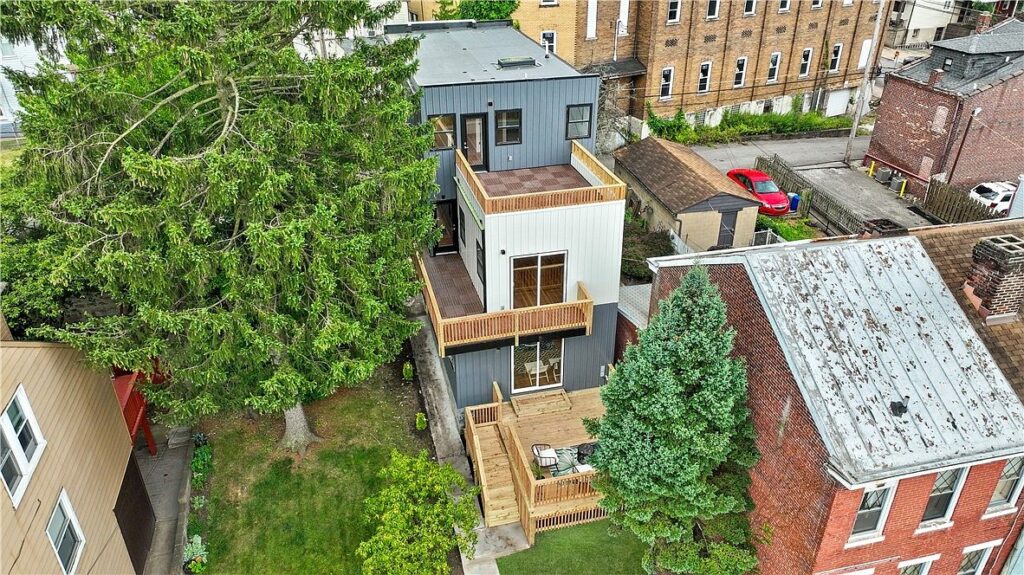
- You want to keep the backyard. Going vertical leaves the yard intact. In some configurations you can even add a rooftop deck.
- The lot is on a hillside. Extending a foundation or digging out on a steep grade can cost more than building up from an existing flat footprint.
- You’re chasing per-square-foot efficiency. On a tight lot, a third floor can deliver new square footage more cheaply than a rear addition that needs its own footings, foundation walls, and roof.
A rear addition is the better call when the foundation genuinely can’t take a third story without prohibitive reinforcement, or when the backyard is large and the setbacks allow a generous ground-floor expansion at lower structural complexity.
Where a third floor makes sense in Pittsburgh
Pittsburgh’s narrow historic neighborhoods are where going vertical makes the most economic and practical sense — and where third floor addition cost in Pittsburgh pays back fastest in added space and resale value:
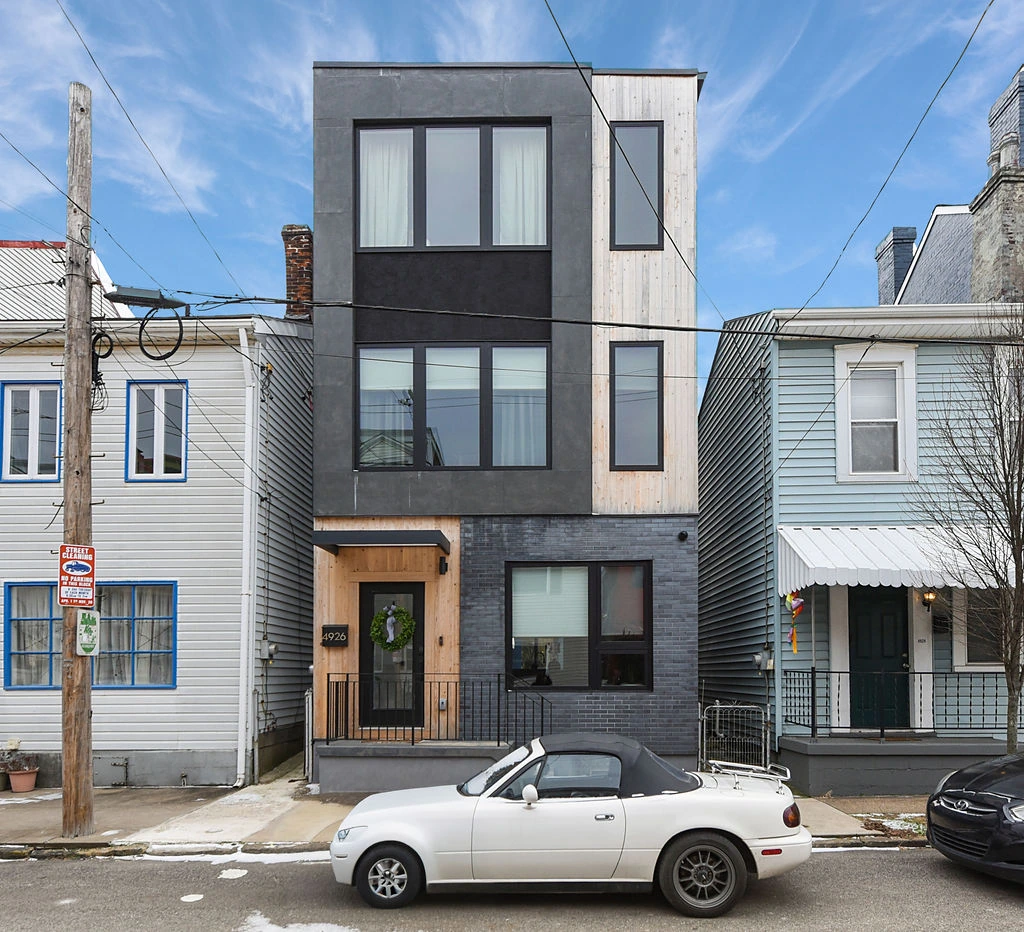
- Lawrenceville — the classic candidate. Narrow attached rowhouses, shallow rear yards, and strong appreciation all support the investment. The 37th Street Residence shows what a vertical build can do on a city infill lot.
- Bloomfield — similar attached-rowhouse conditions; a home on a sixteen-foot-wide lot has very few horizontal options.
- South Side — flat-lot rowhouses with minimal side and rear clearance, where up is simply the most efficient direction.
- Polish Hill — hillside terrain that makes rear additions costly and vertical additions a natural fit.
- Strip District — older conversions and rowhouses near the river with constrained footprints.
- Squirrel Hill and Point Breeze — larger foursquares and Victorians where a third story can create a primary suite or a separate apartment, often with structural bones better suited to carrying the load.
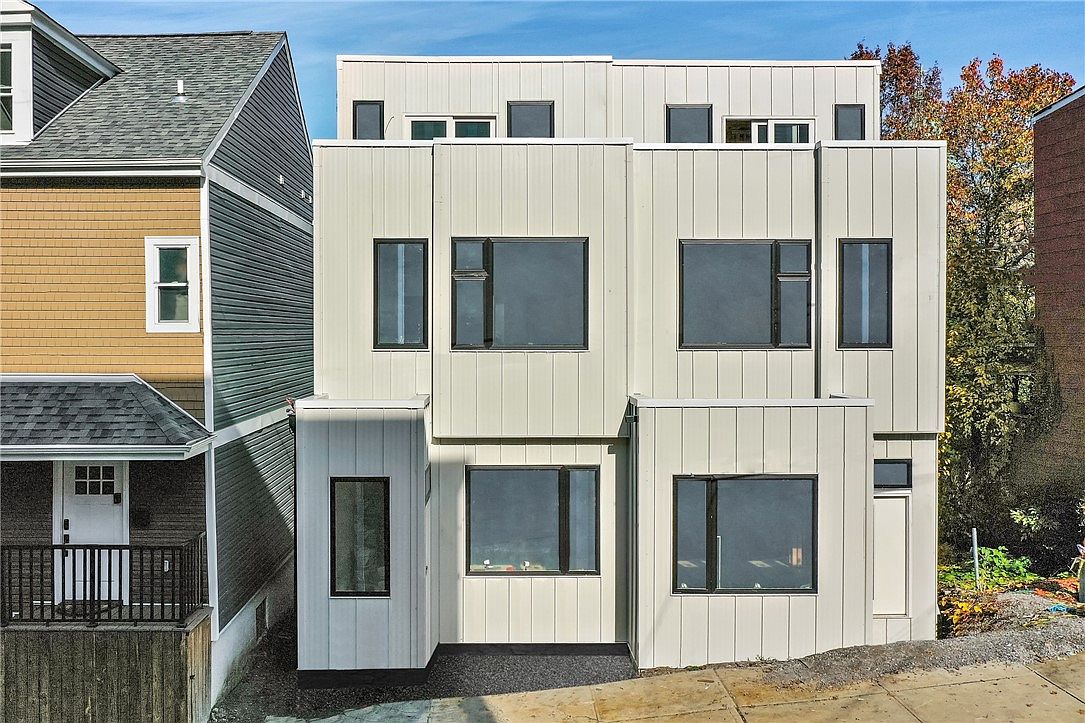
Projects like the Marchand Street Residence, a whole-home renovation in Highland Park, show how a period home can be transformed while keeping its neighborhood character intact.
What to look for in a contractor who does vertical additions
A third-floor addition is not the same job as a bathroom or kitchen remodel. The contractor you hire needs specific vertical-addition experience — and it shapes third floor addition cost in Pittsburgh, because the right crew prices the structural risk honestly instead of burying it. What matters most:
- In-house structural coordination. Can they work directly with a structural engineer, or are you managing that relationship yourself? A firm that has done multiple vertical additions already has working relationships with engineers who know Pittsburgh’s older housing stock.
- Permit history. Have they pulled permits for vertical additions with PLI before? First-time submitters on complex structural projects face longer review cycles.
- A real dry-in plan. Removing a roof exposes your house. The contractor needs a documented plan for how fast they can get the structure weathered in — and a contingency for Pittsburgh weather.
- References from similar projects. Ask specifically for third-floor or second-story vertical-addition references, not general renovation work.
- An honest feasibility read. A contractor who tells you a third floor is always possible — without seeing your foundation — isn’t who you want running a structural project. The right firm will tell you when a rear addition actually makes more sense for your home.
A third floor addition is a genuine solution for homeowners who are out of space and can’t — or won’t — move. Whether your house can carry it depends on a structural engineer’s assessment, not a contractor’s confidence. And third floor addition cost in Pittsburgh always comes down to your foundation, your finishes, and how much of the structure needs reinforcing — which is why a careful builder quotes it after a structural review, not before. If you want a straight answer about whether your home is a candidate, start with our overview of third-floor additions in Pittsburgh, and when you’re ready to talk through your specific house, reach out — we’ll give you an honest feasibility read before anyone talks budget.
Have a project in mind?
If something you read here sparked a question or a project of your own, we’d love to talk it through. No upsell, no hard sell.
Start a conversation →