

How Much Does It Cost to Build a New Home in Pittsburgh? (2026 Cost Breakdown)
D
Picture yourself standing on a lot in Lawrenceville, Bloomfield, or Point Breeze, trying to figure out what number to write on the bank pre-approval form. The cost to build a new home in Pittsburgh doesn’t have a single answer — but it does have real, plannable ranges. Here’s the concrete anchor we give every client at the first meeting: a 2,500 sq ft Standard build in Pittsburgh runs $500,000 to $625,000 in construction cost, based on a $200–$250 per sq ft range. Everything else in this article is about what moves that number up or down.
The number that scares people most isn’t $500,000. It’s the gap between what they thought it would cost and what it actually costs. Closing that gap on day one is the whole job.
What does it actually cost to build a new home in Pittsburgh?
Three tiers cover the full range of new construction we see across Pittsburgh. These are Pittsburgh-specific numbers — not national averages — and they reflect actual project work, not aspirational pricing. If you’ve been searching for the cost to build a new home in Pittsburgh and finding only national figures, here’s the local picture.
- Standard build: $200–$250 per sq ft. Clean modern finishes, an efficient floor plate, builder-grade-plus materials. A 2,500 sq ft home at this tier lands at $500,000–$625,000. Well-built, move-in-ready, no overengineered detail.
- Mid-range build: $250–$325 per sq ft. Upgraded finishes, custom millwork, higher-end appliances, more architectural detail. A 2,500 sq ft home runs $625,000–$812,500. This is where most clients with a defined aesthetic land.
- High-end build: $325–$450 per sq ft. Architecturally designed, premium materials, complex sites, fully bespoke detailing. A 2,500 sq ft home is $812,500–$1,125,000. Site conditions and design complexity are the biggest swing variables.
For context, the NAHB national average for new single-family construction hovers around $150–$190 per sq ft on base construction. Pittsburgh sits higher because of site conditions, regional labor costs, and the specific overhead of infill building in established urban neighborhoods.
Cost ranges at a glance
The cost to build a new home in Pittsburgh, by size and tier
Total construction cost across the three tiers, by home size. Use this to back into a realistic build budget.
What’s driving the per-square-foot number?
The per-sq-ft figure is the sum of several distinct line items. Knowing where the money goes is how you make smart trade-offs without compromising the parts that matter.
- Site work and foundation. Grading, excavation, retaining walls, foundation type. On a flat lot this is predictable. On a Pittsburgh hillside it can double.
- Framing and shell. Structural framing, exterior sheathing, roofing, windows, doors. Relatively stable across tiers — rises with complex rooflines or large window packages.
- Mechanicals (HVAC, plumbing, electrical). These three trades account for 15–20% of a typical build. Radiant heat, smart electrical panels, and multi-zone HVAC push costs up fast.
- Finishes. Flooring, tile, paint, trim. The single biggest tier differentiator. A Standard build uses durable, attractive materials. A high-end build uses natural stone, hardwood throughout, custom tile.
- Cabinets and millwork. Stock or semi-custom cabinets are fine at the Standard tier. Full custom millwork is one of the largest single cost jumps in the upper tiers.
- Fixtures and appliances. A Standard build uses solid mid-range appliances. High-end can run $30,000–$60,000 on appliances alone.
- Professional fees and permits. Architectural drawings, structural engineering, permit fees. Budget 5–10% of construction cost combined.
Why Pittsburgh is its own market
National cost data doesn’t capture Pittsburgh’s specific conditions. When you’re estimating the cost to build a new home in Pittsburgh, assuming national averages apply gets dangerous fast. The city has challenges that are genuinely different from a flat suburban market — and they show up in the budget whether you plan for them or not.
Hillside lots and drainage. Much of Pittsburgh’s residential land is sloped. Building on a hillside means engineered retaining walls, deeper foundations, and drainage that can add $30,000–$80,000 to a site budget before framing starts.
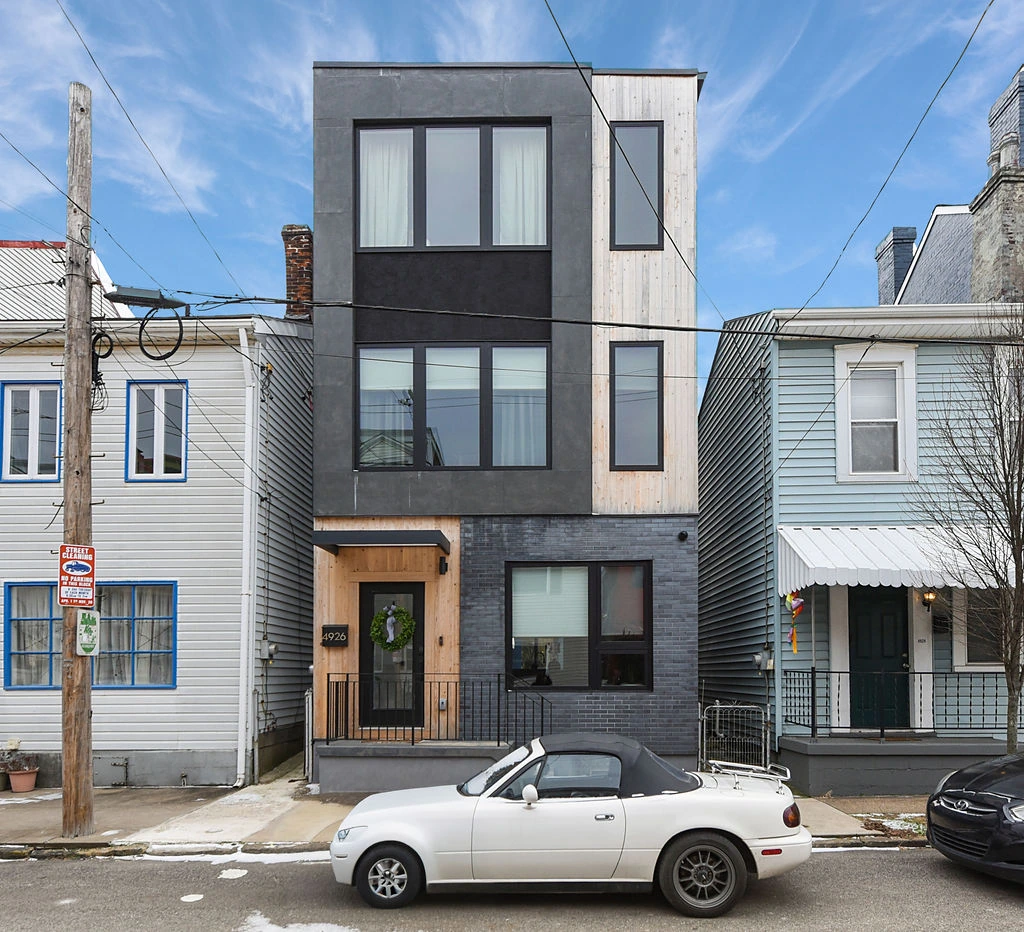
Narrow infill parcels. Lawrenceville, Polish Hill, and Bloomfield are dense. A 25-foot-wide city lot means tighter logistics, hand work where machines can’t reach, and material staging on the street. That overhead is real.
Demo costs on tight urban sites. If you’re tearing down an existing structure to build new, expect roughly $4,000–$14,000 for demo on a standard two-story in a neighborhood like Bloomfield or Lawrenceville. That goes up with basement presence or asbestos abatement.
Ward-level permitting. Permit timelines and inspector availability vary across Pittsburgh’s wards. A seasoned local builder knows which wards move faster and how to sequence inspections to avoid delays that cost money.
Older utility tie-ins. Connecting to water and sewer in older neighborhoods means working with aging infrastructure. Utility upgrades and new lateral connections can add $5,000–$20,000 depending on block conditions.
The cheapest bid is almost always the one that didn’t see the hillside.
The fastest way to spot a builder who hasn’t worked on a Pittsburgh slope: they quote site work as a single line item. On a real hillside job, that line is six line items — engineered retaining, deeper footings, drainage tile, regrade, hauling, and access. Anyone who hasn’t bid the work that way will hit you with change orders the moment the excavator shows up.
Standard vs. custom: where the line is
How much architectural control you want is the single biggest decision after lot selection. Here’s how the two paths differ.
A Standard build ($200–$250 per sq ft) works from a defined set of plans and a specified material package. You pick from options within a pre-established palette. The result is a sharp, modern home without the overhead of full custom design. Right for most buyers building on a straightforward lot in a neighborhood like Highland Park or Point Breeze.
A custom build starts at $225 per sq ft and runs to $425 per sq ft and above for fully bespoke work. At this tier, you’re paying for architectural design from scratch, complete material selection, complex site solutions, and a build process that accommodates changes as the design evolves. Right for a difficult hillside lot, a historically sensitive block, or a client with a very specific vision.
Our custom home builder service covers the full spectrum: architectural coordination, material sourcing, project management, construction. If you want full control over every decision, that’s the path.
For homeowners weighing new construction against a whole-home renovation, the math looks different. Additions on an existing rowhouse often run $150–$225 per sq ft for the addition itself, but structural work underneath can close that gap quickly.
Soft costs most people forget
Your builder’s contract price isn’t your total project cost. The full cost to build a new home in Pittsburgh includes another 10–20% on top for soft costs that hit before and after construction.
- Design fees. Architectural drawings, structural engineering, interior design. Budget $15,000–$40,000 depending on complexity.
- Surveys and soils reports. Required before permitting in most cases. Typically $2,000–$6,000 combined.
- Permit fees. Pittsburgh fees scale with construction value — verify current rates with PLI before signing a contract.
- Construction loan interest. On a 12-month build at current rates, $15,000–$40,000 depending on loan size.
- Utility hookups. New water, sewer, and gas service laterals: $5,000–$20,000 in older Pittsburgh neighborhoods.
- Landscaping and hardscape. Finished yard, driveway, front walk: $15,000–$50,000. A deck belongs in your plan from day one.
- Interior design and furniture. Not in your build contract. Many clients spend $20,000–$75,000 furnishing a new home.
Budget vs. reality
Your mortgage pre-approval is the ceiling of what a bank will lend you. It’s not the same as your build budget — and the cost to build a new home in Pittsburgh that you see quoted is rarely the full project number once lot and soft costs are layered in.
A simple rule of thumb: take your maximum total project spend (lot + construction + soft costs + contingency), subtract the lot cost and 15% for soft costs and contingency, and what remains is roughly your construction contract. If the lot is $150,000, soft costs are $75,000, and your total budget is $800,000, your construction budget is about $575,000. At $200–$250 per sq ft Standard tier, that’s roughly a 2,300–2,875 sq ft home.
That’s the conservative way to think about the cost to build a new home in Pittsburgh: assume the headline number is the floor, not the ceiling.
Also budget a 10% contingency on top of your builder’s contract for unforeseen conditions. Pittsburgh soil, hidden utilities, and infill surprises are real. Clients who build this buffer in are the ones who finish on time and without financial stress.
What to ask a Pittsburgh builder before signing
These questions separate honest builders from low-bid-then-change-order operators.
- Are your allowances specified or open-ended? A vague “$5,000 for tile” allowance won’t buy what you have in mind. Ask for a detailed specification sheet.
- Fixed-price or cost-plus contract? Fixed-price gives you certainty. Cost-plus means you share the risk. Know which one you’re signing.
- What is your change-order policy? Every change costs money and time. Ask how changes are priced and how quickly you’ll get a written cost before work proceeds.
- References on hillside or infill jobs specifically? A builder with experience only on flat suburban lots is not the same as one who has worked a difficult Pittsburgh parcel.
- Who pulls permits and manages inspections? A reputable general contractor handles permitting directly. If the builder wants you to pull your own permits, that’s a flag.
- What does project management look like? Ask how often you’ll get schedule updates, how decisions are documented, and who your single point of contact is.
- Can you walk me through a completed project similar to mine? Not a rendering. A finished home. Walk it if you can.
Putting a real number on your Pittsburgh build
The cost to build a new home in Pittsburgh in 2026 falls between $200 and $450 per sq ft depending on tier, site, and finish selections. The range is wide because Pittsburgh’s conditions are varied — a flat lot in Highland Park is a different project than a hillside parcel in Polish Hill or a narrow city lot in Lawrenceville.
The worked example to anchor all of this: a 2,500 sq ft Standard build runs $500,000–$625,000 in construction cost, before soft costs and lot. Add 10–20% for soft costs and a 10% contingency, and the true cost to build a new home in Pittsburgh for your specific lot and program comes into focus.
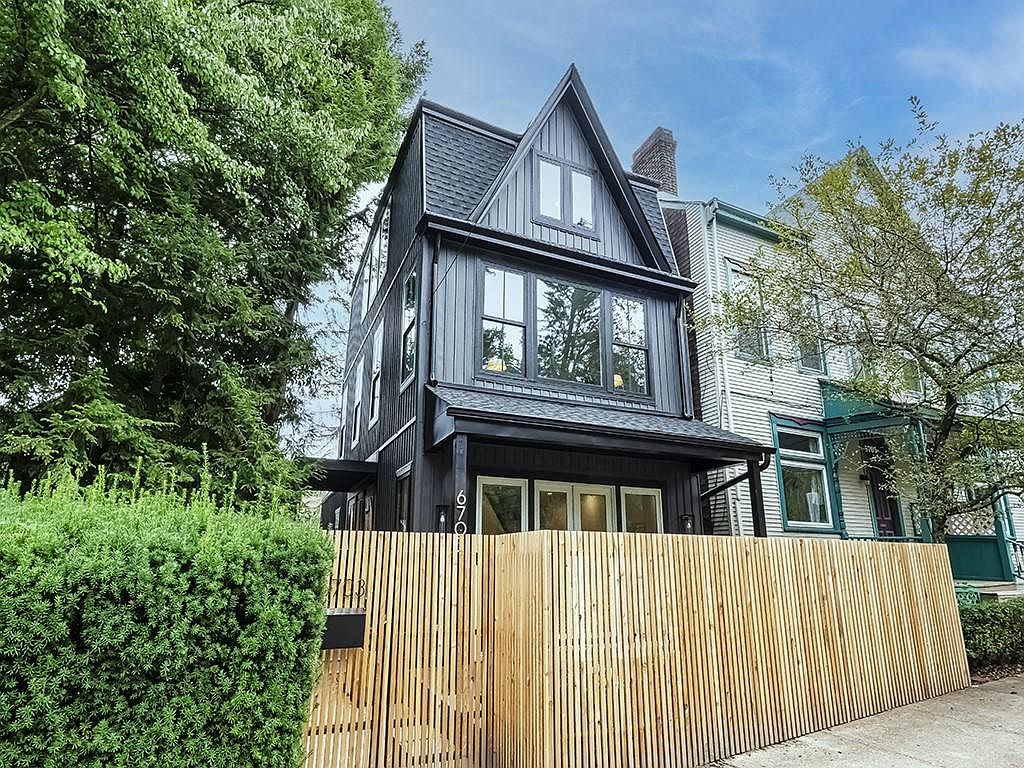
Incline Homes has built across Pittsburgh’s neighborhoods, from the Hatfield Residence in Lawrenceville to the Clement Way Residence — each on a different kind of site, each with its own set of constraints. If you’re ready to talk through what your specific lot and program would actually cost, reach out for a consultation. We’ll give you a real number — not a range so wide it tells you nothing.
Have a project in mind?
If something you read here sparked a question or a project of your own, we’d love to talk it through. No upsell, no hard sell.
Start a conversation →